
Brand Infrastructure
Why Purpose Fails Without Governance — and How Durable Brands Are Built to Last

Every leader eventually faces the same test: can the mission survive success?
Brands rarely decay because founders lose conviction. More often, they decay because the systems around the brand fail as the company scales.
Most organizations assume that purpose erodes under pressure. In reality, what erodes is infrastructure — the decision systems that protect commitments when growth accelerates, scrutiny increases, and incentives compete.
At the leadership level, brand is often misunderstood as communication — positioning, messaging, visual identity. But the organizations that scale well tend to think about brand very differently.
They treat brand as infrastructure.
Infrastructure protects commitments when growth accelerates, scrutiny increases, and incentives compete. It’s the set of systems that allow a company to grow without abandoning what made it matter in the first place.
This isn’t about messaging. It isn’t about corporate social responsibility. And it certainly isn’t about writing purpose statements.
It’s about building operational systems that make better decisions easier than convenient ones.
Brands Shape Outcomes — Whether Designed To Or Not
Business schools often treat brands as symbolic assets — positioning frameworks, visual identities, messaging strategies.
In reality, brands operate as behavioral systems.
They shape how employees make trade-offs.
They influence what customers expect and tolerate.
They affect how capital moves through markets.
They reinforce what industries reward.
When a company commits to environmental stewardship, supplier incentives change. When a marketplace builds around belonging, travel behavior changes. When a consumer brand centers farmer equity, capital flow in a commodity market shifts.
Brands are never neutral.
They produce real outcomes in the world — for customers, employees, partners, and communities.
The question is not whether brands create impact.
The question is whether that impact is designed deliberately or allowed to emerge accidentally.
The Predictable Pattern of Brand Decay
Across industries, brand erosion tends to follow four recognizable stages:
Conviction — Founders define a clear mission and early teams internalize it intuitively.
Expansion — Headcount grows, markets expand, and commercial pressure accelerates.
Drift — Different teams interpret the mission differently as competing incentives emerge.
Erosion — Exceptions compound until customers and employees notice the contradiction.
This process rarely begins with bad intentions. Most companies start with clear commitments.
Early teams internalize those commitments intuitively. Founders make decisions that reinforce them. Customers trust the signals.
Then scale arrives.
Headcount grows. Markets expand. Revenue expectations accelerate.
Interpretations diverge. One team optimizes for growth. Another optimizes for operational efficiency. A third prioritizes speed to market. None of these priorities are unreasonable — but without shared governance, they slowly pull the brand in different directions.
Exceptions become routine.
A supplier relationship compromises sustainability claims. A partnership conflicts with stated values. A campaign stretches the truth because sales pressure is high. Each individual decision seems defensible.
Collectively, they change what the brand actually represents.
By the time customers notice the contradiction, the erosion has already been compounding for years.
This isn’t a failure of purpose.
It’s a failure of infrastructure.
What Brand Infrastructure Actually Means
When I talk about brand infrastructure, I’m not referring to typography guidelines or color palettes.
Those are expressions of brand. Infrastructure is what protects the commitments underneath them.
In practice, brand infrastructure tends to show up across three layers.
Policy Layer
Organizations must define non-negotiables in writing. What happens when profit and principle conflict? What trade-offs are acceptable? Which ones are not? Without documented decision logic, values become opinions.
Operating Layer
Teams need repeatable decision rituals. Cross-functional review processes. Clear ownership of brand stewardship. Governance systems that distribute authority without diluting standards.
Measurement Layer
Commitments must be observable. Companies track revenue and cost with precision, but rarely track alignment between decisions and brand promises. Durable brands develop mechanisms for auditing this alignment.
When these layers exist, commitments survive scale. When they don’t, even well-meaning organizations drift.
A Case Study in Durable Brand Systems
One example of brand infrastructure in practice came from my work with Coffee Uplifts People (CUP), a rapidly growing coffee brand built around economic equity in the global coffee supply chain.
At CUP, the brand name and the mission were the same statement: Coffee Uplifts People.
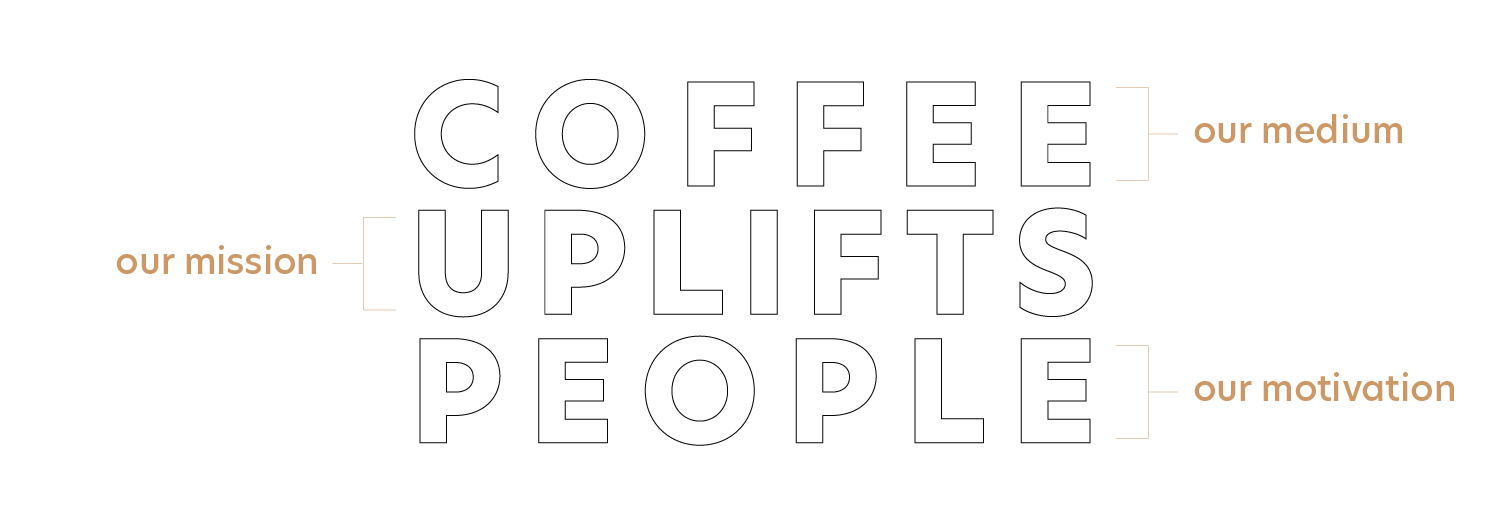
The challenge was not defining that promise. The challenge was building the infrastructure required to keep it true as the company scaled.
Coffee’s global supply chain has historically concentrated profit far from the farmers who produce it.
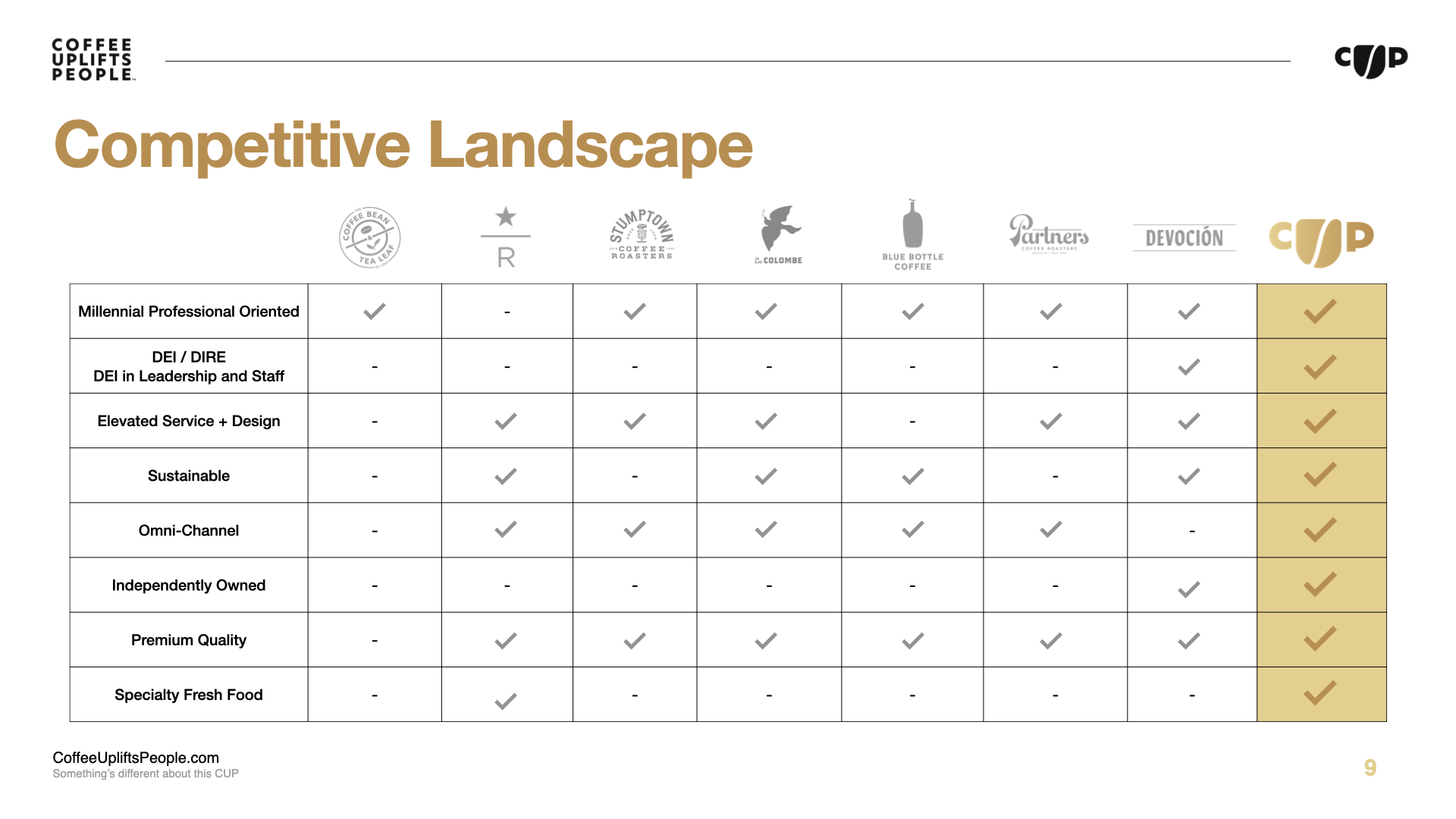
CUP approached the industry with a different premise: the brand should govern the entire value chain.
The team called this principle “Crop to CUP.” From producers and importers to roasters, retailers, and consumers, every stage of the system was meant to reflect the same commitment to economic uplift.
That commitment was codified through a framework CUP called D.I.R.E — Diversity, Inclusion, Representation, and Equity. It wasn’t positioned as a marketing theme. It was designed as a structural standard that applied to sourcing, partnerships, hiring, and storytelling.
As the company grew — expanding into national retail and attracting major partnership opportunities — pressure inevitably followed. Retail buyers pushed for lower price points. New collaborators brought different expectations. Internally, teams began interpreting “equity” in different ways.
Instead of trying to solve these tensions with messaging, we focused on building infrastructure that protected the mission.
Non-negotiables were documented. Supplier requirements were not adjustable to meet retailer margin expectations. Partnership frameworks clarified which collaborations strengthened the mission and which ones diluted it. Governance systems distributed decision authority, so alignment did not depend on the founder being in every room.
Even the visual identity reinforced the system. The CUP logomark — a symbolic toast between two cups — reflected the idea that value should circulate across the coffee ecosystem rather than accumulate in one place.

The result was not just brand clarity. It was durability.
CUP expanded into national retail, achieved full sell-through at major partners, and built partnerships across multiple industries — all while strengthening rather than diluting the mission embedded in its name.
The difference was not storytelling.
It was infrastructure.
The Stakes Are Rising in the AI Era
This conversation becomes even more urgent as organizations adopt generative AI and automated decision systems.
Technology is increasing the velocity of brand expression faster than most companies can govern it.
Campaigns are generated instantly. Messaging scales across channels at machine speed. Customer interactions are increasingly mediated by AI agents rather than human operators.
Without governance, brand fragmentation accelerates.
I explored this dynamic in a recent essay:
The Biggest AI Risk: Brand Fragmentation at Machine Speed
The core argument is simple: AI adoption is currently outpacing brand governance by roughly 6–12 months in many organizations. That gap creates narrative instability.
Brand infrastructure must evolve to match technological velocity. Otherwise companies risk scaling inconsistency faster than they scale trust.
Design Is Never Neutral
Every organizational decision teaches stakeholders what actually matters.
When sales teams make promises products cannot support, customers learn that marketing is aspirational rather than reliable. When partnerships contradict stated values, employees learn that revenue outweighs principles. When growth tactics exploit user psychology, markets learn that engagement matters more than well-being.
People learn faster from what companies tolerate than from what they claim.
This is why brand governance matters.
Without it, decisions that appear small accumulate into structural contradictions.
Leadership Responsibility
Leadership is not just about protecting the vision. Leadership is building the systems that allow the vision to survive.
Strong brands do not survive on inspiration alone. They survive on structure.
Organizations often assume that purpose, culture, or values will naturally endure as a company grows. In reality, growth introduces complexity that those ideals were never designed to withstand without reinforcement.
Teams expand. Incentives multiply. New markets introduce new pressures. Without infrastructure, even the strongest convictions begin to bend.
Leadership, therefore, carries a responsibility that is rarely discussed: turning ideals into systems.
When commitments are embedded into decision frameworks, governance structures, and operating rituals, they become durable. They no longer rely on the presence of a single founder or leader to survive.
That is the difference between values that inspire and values that endure.

The Work of Building Better Brands
Brand is not expression.
Brand, at its core, is operating system design.
It requires leaders to define trade-off frameworks before they are needed. It requires governance mechanisms that survive growth. It requires the discipline to protect commitments when the convenient choice would be easier.
The work is rarely glamorous. It often involves saying no to revenue opportunities that undermine long-term integrity. It requires slowing down when speed threatens coherence.
But organizations that invest in this infrastructure gain something most companies struggle to maintain: trust that compounds rather than erodes.
Better brands are not built through aspiration. They are built through systems.
The world does not improve on its own. Neither do brands.
But they can — if we build them to.
Channing Bailey
Chief Brand & Marketing Officer
Founder, Channing & Company
$300M+ Enterprise Revenue Influenced
I write about brand governance, decision architecture, and building infrastructure that allows organizations to scale without losing what made them matter.
Through Channing & Company, I advise founders and leadership teams on brand governance, decision architecture, and the systems required to scale without mission drift.